Showing posts with label Writing. Show all posts
Do you feel a little stressed when you hear the word "centers"? Upper elementary teachers often relate the word "center" to cute, time consuming, and busy work. Although, those can be what centers are, but that's not what they should be in your classroom.


Centers or Stations should require students to focus on the domains of reading, require them to apply skills that have been taught, and quality rather than quantity should be your main focus. Once you have your Guided Reading system figured out, your next step is to determine what the rest of your class is doing while you meet with your small groups. 

When setting up your centers you need to determine if your students are going to rotate, work off of a menu/contract, how many centers are they required to complete each day, etc. Don't be afraid to try different ways of implementing centers in your classroom. What works for the teacher across the hall may not work of you or your students. Once you have determined your rotation or menu now you need to decide what your students are going to work on.

1. Silent Reading/Read to Self

As educators we know the importance of sitting down and reading a text, so why not make it an option during your centers. If your school doesn't have a set time for silent reading then this is the first center I would implement. Students can silently read a text of their choice for a set amount of time. Allowing students to have a book bin or bag full of texts ensures they have enough reading materials, providing them choice, and teaching them it's okay to abandon a book but not the center.


2. Comprehension Center

In the upper grades comprehension of the five domains of reading is one we focus on more than others. Having students complete an assignment or task related to the text you read during shared reading, or directly related to the standard you are currently teaching, makes a wonderful literacy center. Students can complete task cards, passages, and or text dependent questions.

3. Word Work

Students should work on the meaning of words and not just how to spell words during this center. Providing them with a variety of activities to keep them engaged is key. In the upper grades of elementary I suggest using the standards to help you and your students focus on what to utilize in your word work center. Example synonyms, antonyms, prefixes, root words, and suffixes are great place to start. I love the free activities Melissa from Upper Elementary Snapshots offers in her post. Kristen from Chalk & Apples has a wonderful product for Word Work and Spelling centers for upper elementary.  Please, Please, Please I beg you NOT to include "Rainbow Writing" in your spelling center. There is never an appropriate time for 3-5 students to participate in this activity.  Your center should always provide meaningful learning opportunities for your students.



4. Technology

Utilizing technology in your literacy centers is a great way to engage students. Even if you have limited technology there are some great ways to utilize what you have. If you have one or two computers or tablets you can pull up a set of task cards you have purchased or downloaded in pdf format. Students can work independently, in pairs, or in a team to solve the questions on the task cards. Students can record their answers on a sheet of paper or journal as they use the arrow keys to scroll down through the questions.  Here is a free copy of my Point of View task cards for you and your students.

Here are a few of our student's favorite websites for ELA:

 For non-fiction text National Geographic Young Explorer is a great site.


This is my boys' favorite! ABCYA.com

Last year my son's teacher utilized Big Universe for Guided Reading Groups, Centers, and Homework!

5. Writing

I love planning for my writing center!  For me this is the easiest to plan for :)  Students can work on their independent writing assignment, journal write, work on grammar skills, conference with a peer, etc. The possibilities are endless! In this center I would keep a variety of resources for your students to access to help them with the writing process.  A mentor text, writing office, pictures or copies of Anchor charts, variety of writing utensils, writing prompts, wordless picture books, etc.


How to Implement centers the first month of school....

I hope these ideas will help you start planning for your ELA block this coming school year. When you start to implement Guided Reading and centers the key to a successful year of centers is to train your students on how to complete each center.  You should introduce ONE center a week for the whole class. During this time you will teach your expectations for their voice volume, work requirements, and how to ask and answer their classmates questions because you are not to be interrupted when you are with a group.

For example I always introduce my silent reading center first. For the first week on Monday I explain the center, students will silently read with their book bin on their desk. I explain that my expectation is for them to read silently, any book from their book bin, and to complete a written summary of what they read in their journal. I remind them that I am not to be interrupted when meeting with a student or group of students. Once I tell them to begin their Silent Reading center I sit at my Guided Reading table and will call a student over to complete a reading assessment, usually a Running Record.  After 10-20 minutes I stop my students and praise them for meeting my expectations and address any issues that may have come up.


I complete these same steps for the rest of the week, slowly increasing their silent reading time to equal the amount of time I plan for them to be in this center. If you plan to allow your students to choose where they are going to sit I suggest allowing them to do so towards the end of the week. The second week I introduce a new center. For example it might be comprehension center, again I teach my expectations and review my expectations for silent reading center. Once students have completed the new center they will then move onto silent reading. Again, I will assess students for beginning of the year data.

I continue to introduce a center a week until all centers have been taught. As I complete my one-on-one assessments I will call a small group, 3-4 students, to my GR table to read a text. By doing this I am able to teach my students my expectations for moving from their center to me and my expectations for GR groups.

Implementing centers takes about a whole month, but worth the time! Once your students understand what you expect of them and are able to meet those expectations your ELA block will run smoothly for the remainder of the year. If you introduce new centers throughout the year it will not take as long to implement because your students will have the rest of them down.

To assist students on knowing what center to complete and when many teachers use a rotation chart.


I've added a color version and a black & white version of this board as a freebie in my Teachers pay Teachers store.

I hope this has helped to get you started for planning and implementing centers in your classroom this school year.


This week I am placing my Spot on Research and Monster Math Spiral Review on sale for 50% off!


Common Core Aligned
W.3.2, W.3.5, and W.3.9
W.4.2, W.4.5, and W.4.9
W.5.2, W.5.5, and W.5.9

Use this 8 day lesson plan and resources to help teach your students an easier way to write a research paper, informational text. Everything you need is included!

*Eight days of plans
*Resources and plans for:
-choosing a topic
-creating a research plan
-practice taking notes
-note organization
-paper outline
-how to write an introduction & conclusion paragraph
-peer review
-how to write a bibliography
-research report rubric


4th Grade Common Core Spiral Math Review {Year Long}

On sale for $5.00!!!


Included you will find a Monster Math sheet for each week of the school year. I have divided the sheets up into four marking periods. Each Monster Math sheet has five questions, each question addresses one of CSS standards (Operations and Algebraic Thinking, Number and Operations in Base Ten, Number and Operations-Fractions, Measurement and Data, and Geometry). Monster Math provides a spiral review with the use of word problems, written response, multiple choice, and critical thinking.

Ways to use this product:
Weekly Review.
This is how I use Monster Math in my own classroom. On Mondays I provide my students with a copy of the week’s Monster Math. They complete the questions at home for homework and we review them each morning. On Friday’s my students are given the same Monster Math sheet as an assessment. They are required to show ALL work and label all answers.

2. Morning Work.
Monster Math is a great tool for a weekly math review for Morning Work.

3. Weekly Assessment.
Monster Math is also great to use as a weekly assessment to determine what standards students have mastered and areas in need of review.

4. Test Prep.
Monster Math is a great product to use for nightly homework close to your state assessments. With it’s spiral review you will cover all CCS standards.

Once I implemented Monster Math into my instruction I saw an increase in mastery of skills and standards. I hope you and your students will find great success with this product as well!


I asked my students their opinion on banning loom bracelets in school...and they had opinions!  We then read the "Debate" in our Scholastic Weekly Reader titled "Ban Rainbow Loom Bracelets?".  We discussed each student's opinion.  I then related the article back to last week's skill, RI.4.8 Author's Claim, and asked if they felt each student had provided sufficient evidence to support their opinion or claim.


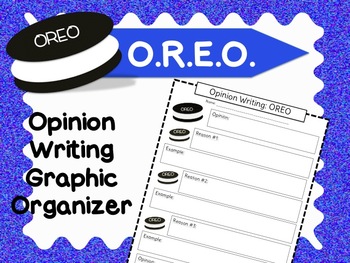
Then it was their turn to state their opinion or claim and support it with evidence. We used Tales of a Teacher's Free Oreo Opinion Graphic Organizer to plan our writing.  Students then planned and wrote their opinion piece on wether or not loom bracelets should be banned from school.

Oreo: Opinion Writing Graphic Organizer

Here is one student's opinion that they SHOULD be banned...


Here is another student's opinion that they SHOULD NOT be banned...


They both did a fantastic job supporting their opinion!

When you present a topic students can relate to they can write forever, present a topic they dislike and it's like pulling teeth to get them to write one sentence.  I personally don't like teeth, so I try to provide my students topics they are interested in when it comes to our Reading and Writing assignments. :)

Today is the last day to grab these Test Prep $1.00 Deals!


We continued working on Idioms this week and used Sabra from Teaching with a Touch of Twang's Idioms: Literal vs. Figurative product.  I loved my students illustrations for their idioms.  Here are a few of my favorites :)


http://www.teacherspayteachers.com/Product/Idioms-Literally-vs-Figuratively-517610


Our social studies curriculum requires us to study famous landmarks of North Carolina.  We studied one of my favorite places this week, The Biltmore Estate.  We watch a few Youtube videos of some tours and my students were instantly intrigued!  They wanted to know more and had so many questions.  We finished up our lesson with a passage on the Biltmore.

Be a parent 1st ....not their friend
This is how I feel this week, except it should say teacher.  I have expectations for my students to pay attention, not to talk when I am talking, not to talk when others are working or during a test, to be respectful of each other, etc.  We actually all most likely have the same expectations for our students, but in my room if I tell my students to stop talking, pay attention, or be respectful that means I don't like my students.  This is according to my students and parents.  TGIF!


The Bermuda Triangle of Room 20.


Today is the last day to enter a chance to win a "Read America" shirt from Mimis Chest and a $20 Amazon gift card from I {Heart} Recess!  Hurry over and enter!


Yeah!  We have moved on from division!  I enjoyed teaching division because of all the new strategies I used this year, but after a month of it I was ready to move on and so were my kids.  We have moved onto area and perimeter.  It was brought to my attention the other day that this is the first time I have taught this skill in three years!  Last year I threw my back out during this skill and the year before I just had my youngest son.

Last Tuesday I posted about our PD, I actually learned some new techniques I couldn't wait to try in my classroom.  I shared the Cube Creator and today I am going to share Probable Passages.  Our district, along with Common Core, is pushing for writing across the curriculum.  

A Probable Passage is used for Preview & Review purposes.  I wrote our vocabulary terms for this unit on the board (area, perimeter, addition, multiplication, length, and width), without going over the words I asked students to write about how these words were related.  I wanted to see what knowledge they already had on this topic.  I was able to QUICKLY see where everyone was on this skill.


 I could quickly tell that this student related the terms to measurement, knew how to find the area of a rectangle.

 Again, I was able to tell with this student that they were able to recall how to find area and perimeter.


This student knew the definition of each of the terms.  I had one student write down, "when you measure tiles on the floor".  I was able to quickly determine he didn't remember the vocabulary from last year, just part of an activity our third grade team does with the students.

After the students shared their writing with their teammates we discussed how the words were related.  I modeled for them how I would of answered the question to model technical writing.  At the end of our area and perimeter unit I am going to have them complete the same writing task to determine if they made any growth in their knowledge of this skill, and writing in math.


For the next part of my lesson I put our districts Meaningful Math Task on the board for students to investigate.  I provided them one minute to think about the problem on their own, then we discussed what information was given and what information was needed to solve the problem.  I then provided each team with unifix cubes and let the work together to investigate and solve the problem.


This group used division to help solve the problem and then the cubes to visually determine if their solution was probable.


This little guy decided to draw his cubes to solve the problem.


This group and I had a great discussion about checking our work.  The problem stated the perimeter was 56, the length and width they came up with was over that measurement.  We also discussed how they were going to fix their shape once they determined how many units they were over.


I had another great discussion with this group.  When I walked  by they had written down 30 and 26.  They determined this was the length and the width.  I asked them to draw their rectangular shape with their measurement and check their work.  Once they determined their perimeter was doubled, we discussed why and reviewed that 26 was the total for two sides of the rectangle, as well as 30.  They were able to fix their mistake quickly.


Once all teams had a solution we discussed their answers, how they discovered their answers, and how all the rectangular shapes had different lengths and widths and the same perimeter.


 I really liked the rigor with this task, because this is similar to the types of questions our students will answer on the End of Grade test.  I created a Multi-step Area and Perimeter pack that we are going to use this week.  I am actually going to use it during my observation Tuesday, so I am not sure I will be able to snap some pictures.  I created three Math Investigations, 20 task cards, and a worksheet for students to complete.  It is available in my TpT store if you are interested, or you can Pin It To Win It!


PIN IT TO WIN IT!

1. Pin the Area & Perimeter Pack image above on Pinterest.
2. Leave a comment with your email and the URL after you have pinned the image in your comment.

I will choose a winner using a random number generator and announce the winner next Monday, February 3rd. Good Luck and thanks for entering!


Don't forget to "Follow The Trail" to enter a chance to win 14 products and a $25 TpT gift card!


Today I am linking up with my friend and Best Blogging Buddy, Amelia from Where the Wild Things Learn for her "A Day Our Way" linky party.  For this linky we are sharing what a day in our classroom looks like.  I hope you enjoy hearing about our day; I know I love seeing how other teachers plan their days and how education is not "cookie cutter".


Morning Work:
My students arrive between 7:30 and 8:00, during this time they unpack, work on morning work (usually Accelerated Math or Math review), go to the library, take Accelerated Reader test, etc. We are required to stand outside out doors to greet the students and parents.  I usually work on grading homework during this time or put grades in the online grade book.  I have a cart I place my laptop on to work on grades and to collect homework.

Reading:
Our reading block begins between 8:15-8:30, depending on our school announcements (they are on the tv) and the amount of morning work assigned.  We begin our lesson with a phonics lesson, based on the rule our grade level spelling words follow.


I then move onto our whole group lesson and students usually add to their interactive notebook or reference back to it during instruction. We do not have text books so their interactive notebooks are their text books.  During the lesson I use the Smartboard to drive my instruction.  We are not required to write out our lesson plans in written form (six point, etc.) we do them all in Smartboard.  The first slide states the CCS and each slide afterward is step by step to our lesson.


After whole group instruction students then work in pairs or teams to dive deeper into the skill.  (You can check out my Theme or Main Idea posts for more info.)  I always incorporate some sort of cooperative learning structure, I just don't know how people teach without them!


 After whole group, students read silently, I do not use centers or stations in my classroom. As I posted earlier this school year, I follow Laura Candler's Reading Workshop you find that post HERE.  I have an amazing group of students who LOVE to read silently, they were actually whining when the timer went off today.  While students are silently reading I pull small groups to my table to work on specific skills.  A tip I learned years ago was to pull your intensive learners second.  These learners are the ones who often have difficulty staying on task in centers or silent reading, due to their struggle with reading, so if you pull them second you are breaking up their independent working time.  Therefore, providing a mental break and the ability to get up and move.


 After small group and silent reading students complete an Independent practice.  This is directly related to the skill we worked on during whole group and small group lesson. After reading my students use Head Over Heels for Teaching's Reading Response product.  (My kids LOVE these little menus!)


Math:
I have enjoyed teaching Math this year. I feel like I have a better understanding of the CCS and have challenged myself to finding and using some sort of hands on activity each day. Which is why I have started my Mathematical Monday linky :)


Our math curriculum is more of an inquiry based method.  Every Monday students work on solving a Meaningful Math Task with no front loading.  They are able to get some quickly and others can be challenging for them.  During the week we refer back to the meaningful math task as they learn more and more about the skill.

I like to incorporate math games, activities, cooperative learning, and math task cards for scoot into my lessons.  The kids really enjoy the variety of activities.  For more about my math lessons check out Monday's Mathematical Monday linky.

I do not give daily Math homework, this is the first time I have ever made that decision.  I chose not to this year because I am using more hands on activities I have noticed the students grasping the skills better than in previous years.  I do a constant spiral review for morning work and for weekly homework with my Monster Math.  Students are assigned Monster Math on Mondays and it is due Friday, this is when we go over the questions.  Having the spiral review has helped tremendously.

Lunch:
Yeah! We get to eat!  However, at my school we do not have duty free lunch.  We sit in the cafeteria at the "teacher table" and are frequently interrupted by students who need things opened, students tattling, loud classes, and the occasional random parent teacher conference.

Recess:
I {Heart} Recess!  We are required to provide students 30 minutes of outside time each day.  This is unstructured time and the boys spend their time playing football or kickball and the girls spend their time playing on the equipment.

Resource:
My class has a resource everyday except Thursdays, makes for a long day. This is the only time of day that is duty free, I get to use the restroom, check my mailbox, make copies, etc. Tuesday's we have back to back resource to provide our grade level time to meet weekly for planning purposes.  For more information on how we plan please check out my Team Planning post.

Writing:


I break up my ELA block because this group needs the break.  They need a change of things every 45-50 minutes, so teaching writing directly after reading they would be in lala land or trying to continue reading their books.  We use Jivey's Mentor Sentences, my Language Pack, and work on a writing piece during the week.  I try to link a skill from the mentor sentence to the needs of my students.  For example one of the mentor sentences had a prepositional phrase, my kids were struggling with this skill so I taught a mini lesson one day and the next day my students applied it to their writing.


Science & S.S.:
I am not sure about you, but some days it is difficult to get to EVERY subject, especially with testing pressure in ELA and Math.  To try to solve this problem I alternate Science and S.S., this is not ideal but you do what you gotta do.  Some weeks I teach Science three days a week and S.S. two days, then alternate the following week.


Our Science lessons are based on my Interactive Notebooks, again we do not have text books and the ones we do have are out dated and we don't have class sets.  I also incorporate Brain Pop, Studyjams, and Youtube into my lessons along with hands on experiments or activities.


For Social Studies we study North Carolina using a variety of resources and students work on a few projects throughout the year.  

Cursive:
This year NC made some changes and we are now required to teach Cursive again.  I just started teaching it after break and my kids are eating it up!  They can't wait to learn the next letter, and I am impressed with how well they are doing.  This is a short lesson 10-15 minutes tops!

Read Aloud/End of the Day:
I read aloud to my kids at the end of the day because it keeps down the noise level and takes the opportunity for chaos away.  We just finished Wonder and started Number the Stars yesterday.  They LOVED Wonder and so did I!

Our contracted time is to 3:00 and kids are dismissed at 2:30.  For the 30 minutes left of my day, well my contracted day, I catch up with other teachers and staff members to debrief from my day.  Tuesdays we have Family Meetings (staff meetings), Correlate Meetings, Vertical Team Meetings, or other meetings.

After 3:00:
Mondays, Tuesdays (non-Family Meeting days), and Thursdays several teachers and I run in the neighborhood behind our school.  We started after the holidays and are up to six teachers.  I am blessed to work at a school where we are a family and support one another professionally and personally.

I hope you have enjoyed a visiting my classroom for the day!

Back to Top